Thursday, July 2, 2015

505 Games Mobile Launches Strategy RPG Hidden Heroes on iOS

505 Games Mobile announced the official release of Hidden Heroes on iOS devices. Developed by Lume Games, the strategy role-playing game sees players building a kingdom and army to free the land of Stormvale from The Chaos Cultists.

Hidden Heroes begins with players selecting one of three starting heroes. Players will collect more heroes over time, each with a different type and special ability, and they can customize their teams before heading into battle. During combat, players tap and drag their individual heroes to control their movement, or they can double-tap to focus every hero on the same enemy.

As players complete battles, they’ll collect gold, which can be spent to upgrade the attack and health stats of individual heroes. Each hero has a level cap, and can be evolved using gems, the game’s premium currency. Players can also purchase new heroes, or additional hero spots for their team, using these gems.

Hidden Heroes

As players clear lands of enemy control, they can discover new lands, or runes, by selecting a “wild rune” from the game’s menu, or by scanning real world QR codes or bar codes on physical objects. The kind of object doesn’t matter, but players can manually name these kingdoms before freeing them from enemy rule.

Each new land is split into multiple sections, with each potentially under the control of The Chaos Cultists or other players. If gamers can conquer each individual piece within a limited amount of time, they’ll add the land to their kingdom. Afterward, the player’s home kingdom will collect income from these lands over time.

Hidden Heroes 2

In addition to these single-player encounters, players can head to the Stormvale Arena and compete in multiplayer tournaments to gain victory points. After each tournament, each participant receives rewards based on their final ranking.

In a statement, Joel Breton, senior vice president of mobile games at 505 Games, commented:

505 Games has extensive experience publishing leading-edge mobile strategy-RPG titles, and we are thrilled to introduce our latest addition to the category. The inclusion of new technology that enables players to expand their kingdoms, coupled with cooperative and social features, will enhance what is already a deeply engaging gameplay experience for players worldwide.

Hidden Heroes is available to download for free on the iTunes App Store.

7 Things You Should Learn From The Customer Who Doesn’t Convert

Everyone hates shopping cart abandonment.

It’s the boogeyman of Internet marketing, the nemesis of conversion optimizers, and the headache of Internet sales. We fight it tooth and nail. We test incessantly. We optimize, reoptimize, and re-reoptimize, trying to defeat the rising tide of abandonments.

But for all our frenetic battles against shopping cart abandonment, could it be that we’re missing some very valuable information?

I think we are. Shopping cart abandonment is not the pure and unadulterated evil that we think it is. It is an opportunity to learn.

Here’s what we should learn from the customers who choose not to buy. This isn’t an article on techniques to obliterate abandonment. It’s not even about abandonment per se. It’s about all your website traffic and those pesky customers who don’t seem to convert.

Is there anything we can learn from them?

1. Learn about the buy cycle.

One reason why customers don’t convert is because they’re not at the right point in the buy cycle.

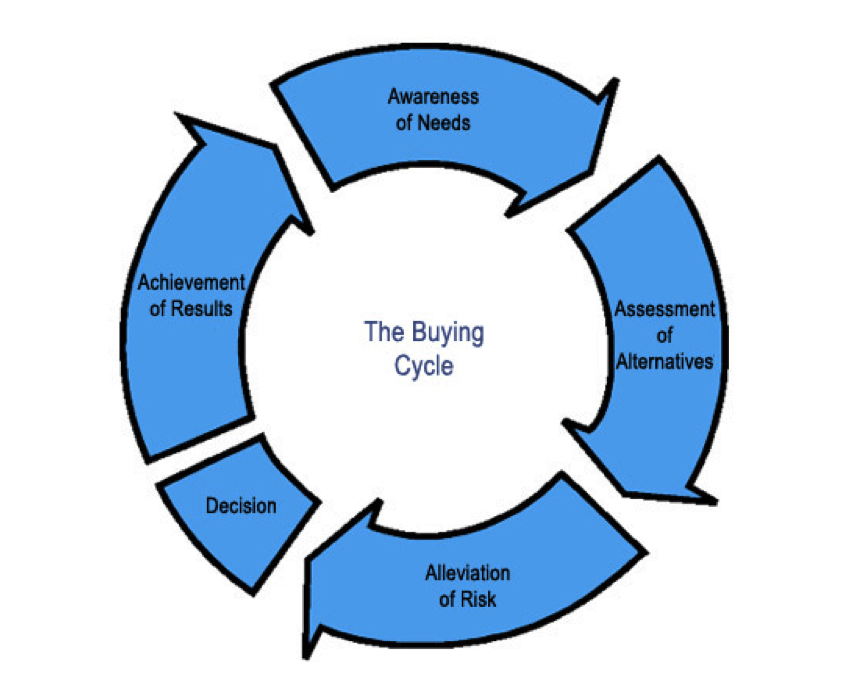
What’s the buy cycle you ask? It’s not a misspelling of a two-wheeled transportation device. The more clarifying term, “customer buying cycle,” describes the process that a customer takes when they are considering a purchase.

Here it is in all its visual glory.

the-buying-cycle

There are five basic stages to the customer’s buying cycle. I made them all start with c- and sound the same:

  1. Conception: The customer is aware that she needs or wants something.
  2. Comparison: The customer considers the various places to obtain this product or service
  3. Consideration: The customer evaluates the best and safest decision for her particular needs and situation.
  4. Conversion: BUY! The customer makes the decision to act on this decision.
  5. Continuation: The customer likes the experience, and decides to do it again sometime.

The reality of a customer buying cycle is that a customer can only be at one point on the cycle at a time. Accepting this fact is a basic realization of non-converting customers. Why didn’t they convert? Because they were in the conception, comparison, or consideration phase, that’s why.

That’s not bad. It just is.

Understanding the buy cycle is a key lesson, because you realize that the “lost” conversion may not be a lost conversion at all. It’s a future conversion from a customer who was in the conception phase of the buy cycle.

Obviously, not everyone is going to buy from your website the first time around. You wouldn’t want that anyway, because that would mean that you would have 1) far fewer return visitors, and 2) fewer future conversions.

The cycle, like most other life cycles, seems a little sad at first. But once you realize, hey, it’s a cycle, then you are able to deal with your grief and make more confident marketing decisions.

2. Learn that higher traffic does not equal higher sales.

Here is a saga that many SEOs and digital marketers have experienced.

The director of marketing says, “We need more traffic!” SEOs and writers start to hustle, working their magic and mixing their potions. Traffic starts to climb. KPIs are achieved. Goals are met.

And what happens? Sales plateau.

Why is this the case? Higher traffic does not equal higher sales. Normally, the more traffic you get, the more you tend to sell. In some situations, however, the increasing traffic is driving traffic that is not prepared to convert.

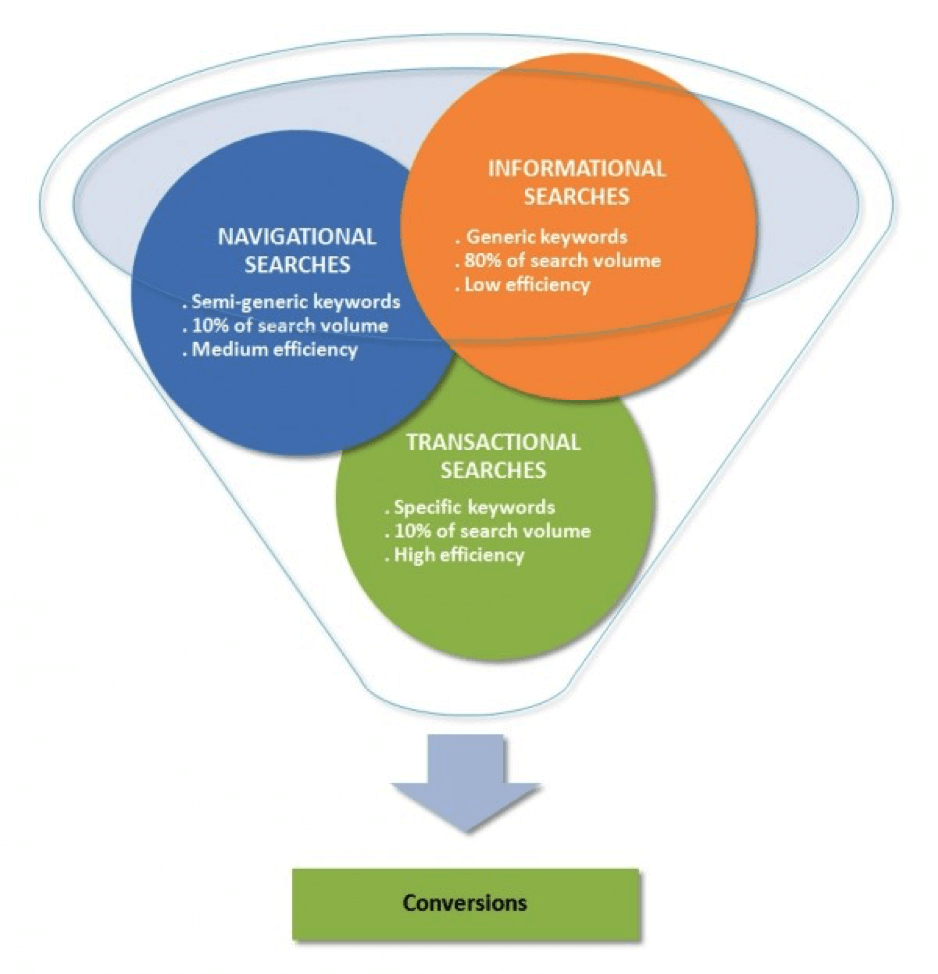
Look at the diagram below. There are three main types of searches, navigational, informational and transactional. If you increase traffic, you may be boosting navigational and informational searches.

types-of-searches

Source

Informational queries and the resulting traffic is precisely the type of traffic that is often produced by greater content marketing efforts. Since the nature of the queries is informational, it is likely that it may not drive high-converting traffic.

It’s important to realize that content marketing for all its effectiveness is not a guaranteed route to higher sales. Content marketing agrees to meet customers on their own turf, in their own time, and on their own terms.

More traffic is great. But it just might not translate into immediate sales.

3. Learn that there is such a thing as search query intent.

In keeping with the point above, we need to realize the truth about search queries. Not all queries are created equal. Every query has intent, and that intent impacts whether or not the customer who lands on your website is going to buy or not.

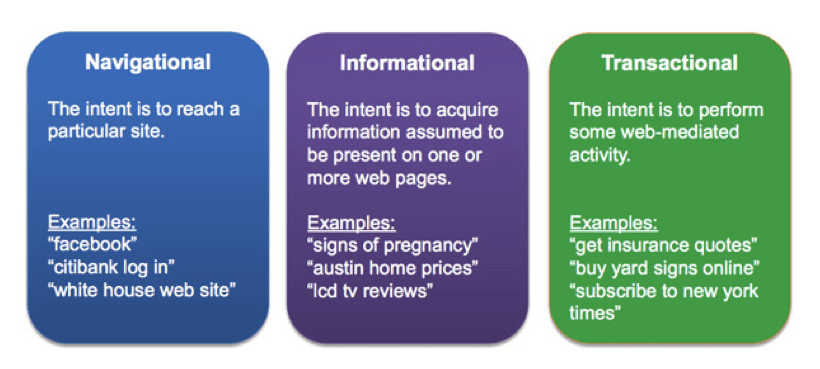
All the search traffic that is rushing into your funnel can be categorized in one of three ways:

  1. Transactional Queries – People who want to buy. They are looking to make a purchase right away or very soon. Many of these searchers will convert.
  2. Navigational Queries – People who are trying to find your website. They may or may not be ready to buy. More often than not, they’re doing pre-purchase research.
  3. Informational Queries – People who are looking for information. These searchers are the least likely to convert right away, but they comprise the largest percentage of website traffic.

navigational-informational-transactional

Source

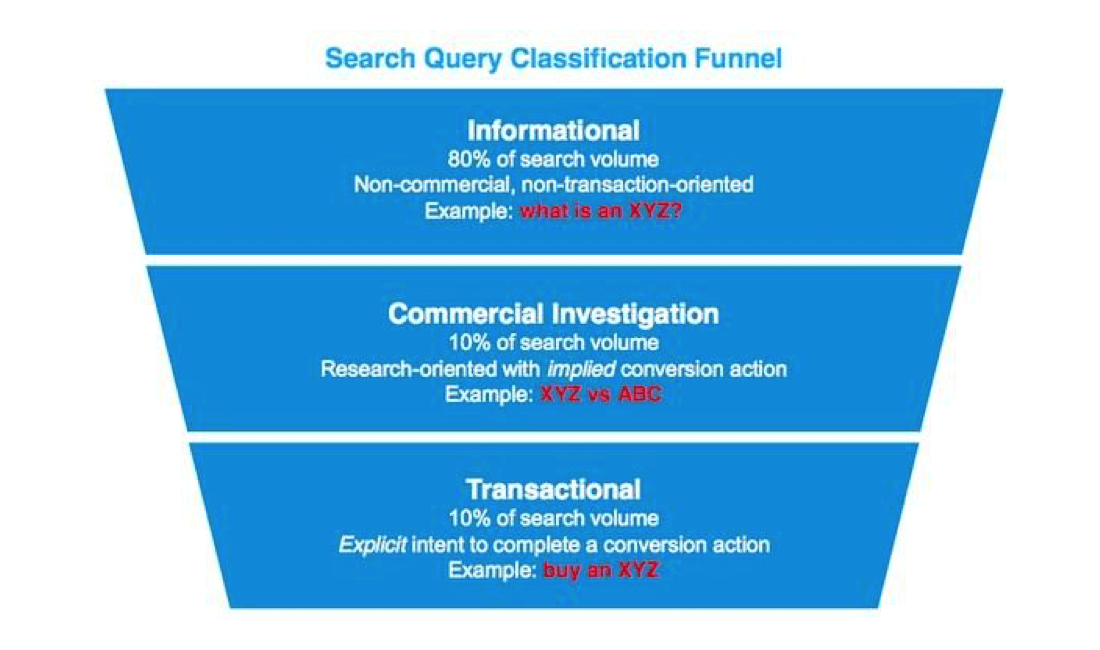
Brightedge estimates that a whopping 80% of searchers will land on your website with a desire to get information, not to buy. Only 10% are looking to buy, and therefore likely to convert.

search-query-classification-funnel

Source

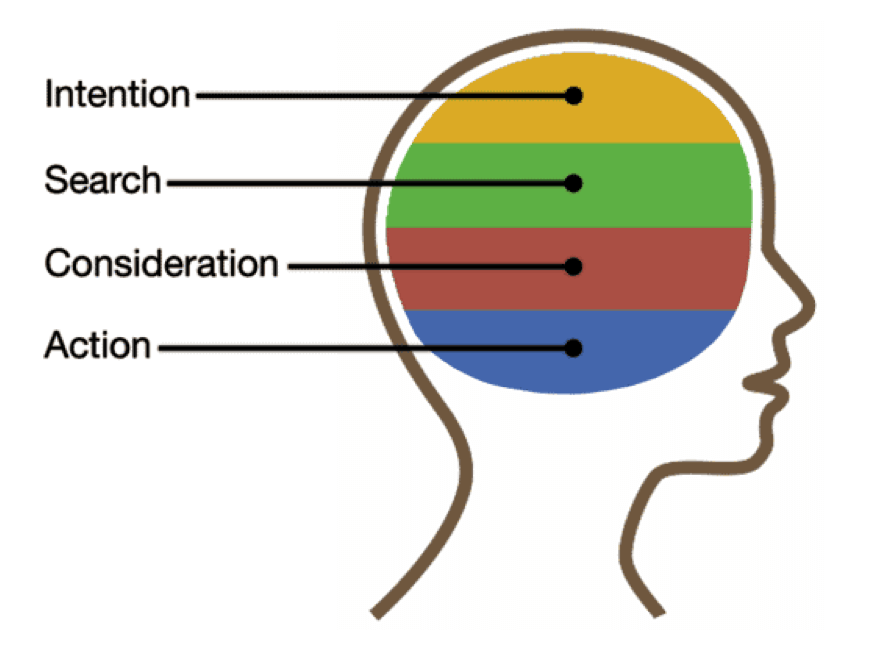
Every searcher starts with intent. This intent, one of the three above, will cause them to act in different ways when they encounter your website.

intention-search-consideration-action

Source

The better you understand the different types of queries, the better you’ll be able to attract just the kind of search traffic that is most likely to convert.

4. Learn that conversion optimization is important.

All these points lead to an overarching lesson: Conversion optimization is really important.

Why? Because conversion optimization looks at the customer who doesn’t convert, and says, “How can we make you more likely to buy?”

Rather than rely on guesswork, conversion optimization begins a rigorous process of research, analysis, and optimization to turn that non-converting traffic into major conversion improvements.

Conversion optimization techniques “improve the effectiveness of your site to boost sales with the same amount of traffic you’re currently receiving.”

You don’t need more traffic to boost your sales. You just need to improve your website.

How does it work? By testing changes. Normally, conversion rate optimizers (CROs) test versions of a website, compare them, and use the one that converts higher.

It’s A/B testing, and it’s insanely effective.

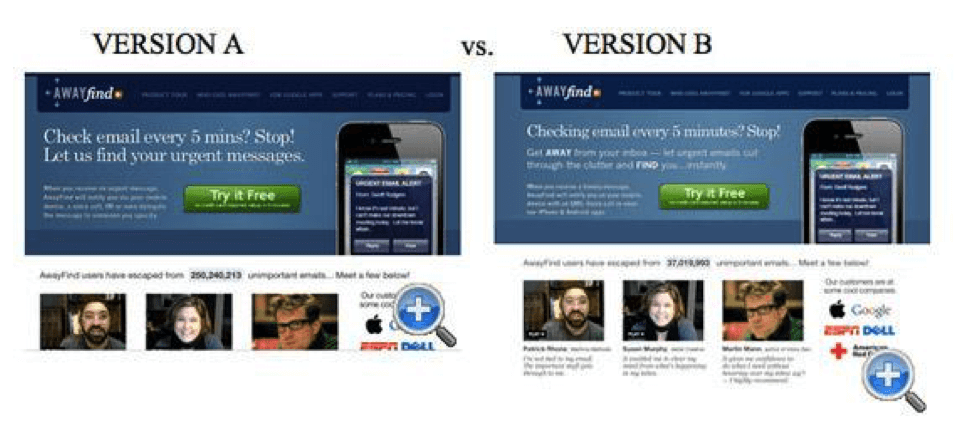
A/B testing, also known as split testing, can produce shocking results. For example, a little headline change pictured below, Version B, boosted conversions by 38%.

versiona-versionb

Source

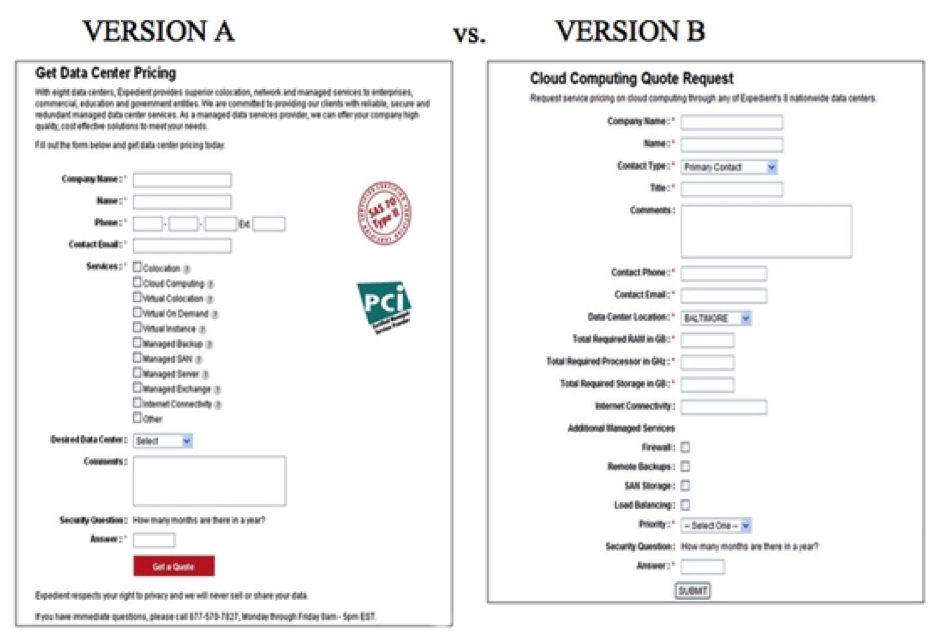
A new signup form increased this business’s leads by 368%.

versiona-versionb-2

Source

Conversion optimization is the path to higher sales.

Sure, the non-converting customer is no fun. But moving the needle on conversion rates though some patient testing is amazing.

5. Learn more about your customers.

When you discover that your “customers” aren’t really customers after all, you start to wonder, what are they doing? That’s a great question. But it begs a deeper question: Who are my customers anyway?

One of the most effective methods of gaining more sales is understanding who your customers are. How do you do this?

You read their minds.

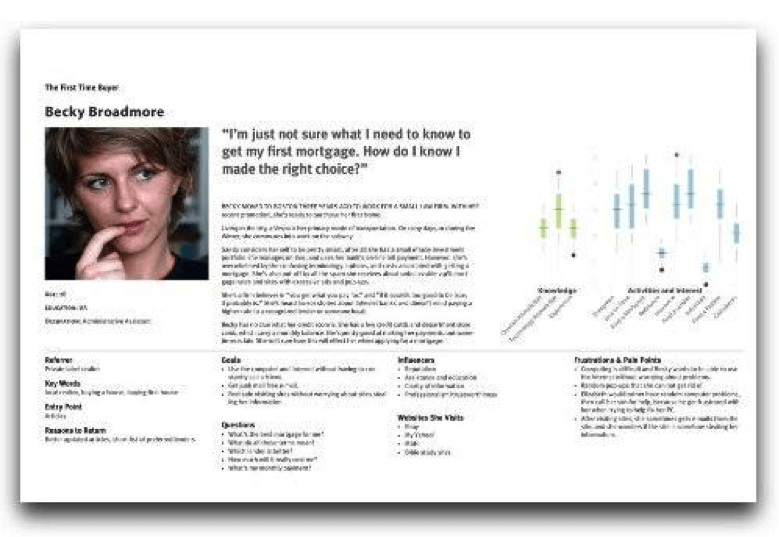
Reading your customer’s minds isn’t as sinister as it sounds. You can do this effectively, safely, and with zero hypnosis experience. It’s called the persona.

A persona in commerce is defined as “the ideal visitor you want to have take a specific action on your site.” The most popular way for digital marketers to shape personas is by using demographic characteristics such as age, income, location, gender, etc.

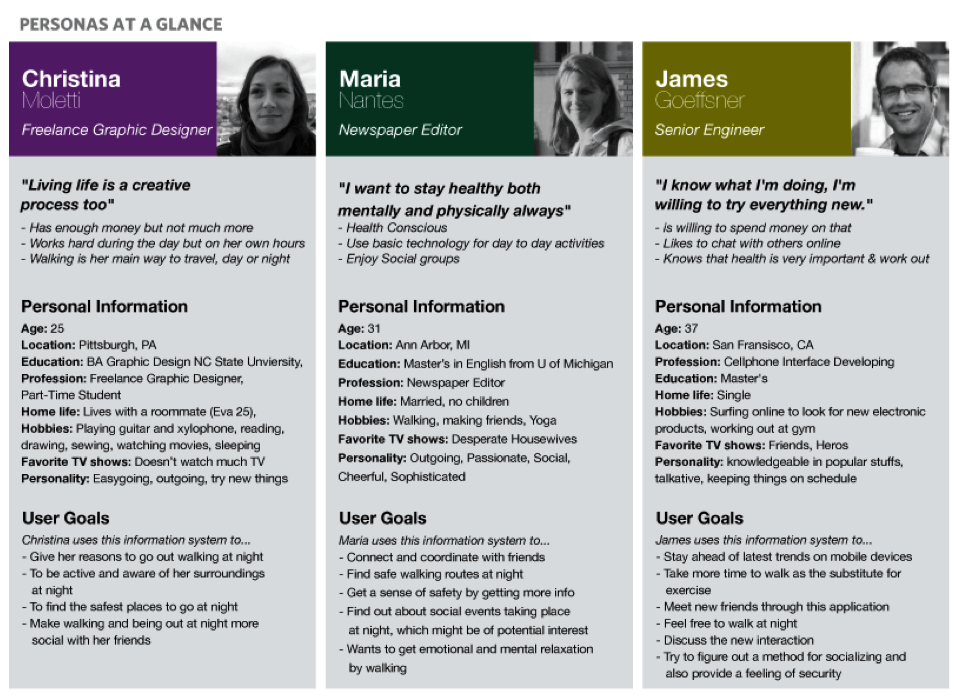
Here are some example personas.

personas-at-a-glance

Look at how those personas define the ideal customer. They are focused. They’re not going after “men, aged 35-45.” They’re going after James, 37 who lives in San Francisco, and likes to watch Friends.

A persona needs to be specific because your product is specific. A persona needs to be specific, because you aren’t trying to sell to a mass of incoming search traffic. You’re trying to sell a product to the customer who needs and wants it.

Your persona can be as detailed and as visual as you want. This example persona uses a problem statement to define why the customer is visiting the site. The problem statement is “I’m just not sure what I need to know to get my first mortgage. How do I know I made the right choice?”

persona-detail

This persona problem statement is helpful, because it allows marketers to hone in directly on solving the customer’s problems.

Different analytics platforms including Google Analytics can help you understand your customer demographics in order to make better marketing decisions.

6. Learn more about your competitors.

If your customers don’t convert on your website, then whose site are they converting on?

It’s time to scope out the competition. Chances are, you probably know who your competitors are. But do you know why your potential customers might be defecting to them?

What I recommend is spying on your competition, legally of course. You can use the same tools that you use to analyze your own website. Most of them are free. These tools and techniques can furnish you with a huge amount of information that puts you in complete control of the competition landscape.

The more you know about your competition, the better you can respond.

7. Learn that testing is important.

This is one of the most obvious things to learn from the customers who don’t convert: Testing is important.

Split testing is easily one of the most powerful techniques ever to happen to digital marketing. Although I’ve already spent some time drooling over it in this article, I want to point out here that testing indicates exactly what’s wrong with your website and what fixes it.

The moment you run a test, identify a winning variable, and make a permanent change, things happen. You realize, “Wow! This is powerful stuff!”

Conclusion

If your customers aren’t converting, don’t panic. It’s typical. Instead of responding with frustration, dive in deeper. Discover the information that will make you a more informed and effective marketer.

Non-converting customers are one of the most valuable assets, because they can tell you what’s not working and how to fix it.

What have you learned from customers who don’t convert?

About the Author: is a lifelong evangelist of KISSmetrics and blogs at Quick Sprout.

Facebook Helps Extend Reach of TV Ad Campaigns (Study)

How can advertisers complement their traditional television ad campaigns with digital components such as Facebook?

The social network commissioned a study by Nielsen on how 15 campaigns for TV shows, movies and console games performed across TV and Facebook, and the social network’s head of entertainment measurement, Jason LeBar, spoke with Facebook IQ, joined by Nielsen director of media analytics Nichole Henderson. LeBar and Henderson are pictured on the right.

Highlights of their conversation with Facebook IQ follow:

LeBar:

We found that cross-platform strategies were successful in increasing the reach efficiency of the campaigns. Facebook was able to accurately target audiences and manage frequency, resulting in an average of 10 times higher efficiency in building unique reach when compared to TV. Marketers can use these findings and tools like Total Ad Ratings measurement to optimize their cross-platform media strategies in a way that really capitalizes on each platform’s strengths.

The research showed pretty clearly that Facebook is an effective tool marketers can leverage to extend reach among target audiences. Facebook helped reach an average of 10 million incremental people—10 million people who would not have been reached had the studied campaigns used TV plans alone. That is a significant number of people, all of whom can impact the success of a film, TV show or console game. Building reach is critical throughout the marketing launch cycle for all forms of entertainment, and we saw that Facebook was effective in both building target reach and doing so efficiently.

We actually found some interesting differences across the three verticals. Overall, Facebook was able to build reach more efficiently than TV in each type of campaign we studied: 15 times more in the film campaigns, nine times more in the console gaming campaigns and five times more in the TV campaigns. We saw that film campaigns were larger than the average entertainment campaign, averaging 1.8 billion exposures (compared with the overall entertainment average of 1.4 billion for the 15 campaigns). We also saw that console gaming campaigns typically targeted younger males, which Facebook can do accurately, while the TV campaigns tended to have broader targets (typically people ages 18 through 49).

Henderson:

Nielsen typically measures advertising effectiveness using the 3R framework of reach, resonance and reaction. But in this study, we focused specifically on campaign reach, looking at data from 15 entertainment campaigns that were measured with Nielsen’s Total Ad Rating Product. This tool measures the reach, frequency and GRPs (gross rating points) of cross-platform campaigns. The study examined these campaigns and their corresponding media plans. The average number of TV exposures for each of these plans was 1.4 billion, and the average number of Facebook impressions was 69 million. But it’s important to note that the campaigns also varied in size, with the TV plans ranging from 99 million to 3.5 billion exposures and the Facebook campaigns ranging from 22 million to 134 million impressions.

Building on Jason’s point, we found that many younger people were being reached on Facebook who would not have been reached through TV alone. More specifically, Facebook delivered an average of 13.4 percent in Facebook-only reach for target audiences ages 18 through 24 and 9.4 percent for audiences ages 25 through 34. The data also showed that more than one in three (35.9 percent) of those reached on Facebook were light TV viewers (who make up the bottom third of TV viewers based on total viewing time).

Readers: What did you think of the findings by Nielsen (on Facebook’s behalf)?

FacebookIQNielsenCrossPlatformEfficiency FacebookIQNielsenCrossPlatformReach

Facebook to Announce 2Q Financial Results July 29

Facebook will announce its second-quarter-2015 financial results after market close Wednesday, July 29.

The company will host a conference call at 2 p.m. PT/5 p.m. ET that day, which can be accessed via its investor relations site, accompanied by a press release, financial tables and slide presentations.

A replay of the call will be available via the investor relations site or by telephone for one week following the call at 404-537-3406 or 855-859-2056, conference ID No. 69328687.

Readers: What are your expectations for Facebook’s second-quarter-2015 earnings?

Q2OnComputerScreen

Images courtesy of Shutterstock.

The Demise of Facebook’s Organic Reach

The Demise of Facebook’s Organic Reach written by Guest Post read more at Small Business Marketing Blog from Duct Tape Marketing

Facebook Icon CCSince its launch in 2007, Facebook’s Pages have promised businesses a free online presence with which to connect to customers, offering the opportunity to publish updates and promotional content directly into their news feeds. Yet for the past year, SMBs have seen the organic (ie. unpaid) reach of their posts diminish significantly.

The data supports this conclusion. In fact, Facebook has been slashing organic reach for years. Research conducted by Ogilvy & Mather shows that changes to Facebook’s algorithm have reduced the average exposure of unpaid posts from 12% in October of 2013 to around 6% in February 2015. In April 2015, eMarketer published data collected by Adobe showing an average organic reach of 4.3% for posts by retailers, which lead all other industries surveyed (tech, hospitality, and financial services all fell below 4%).

In a blog post from last November, Facebook acknowledged this trend and noted that it will continue.

This squeeze is part of Facebook’s overall monetization strategy and applies across the board. It doesn’t matter whether you are a major brand with millions of followers and millions more in ad budget or a small business that has depended for years on Facebook to reach a loyal customer base in the hundreds or thousands. Going forward, brands that want placement will have to pay for it.

Small Business

The precipitous decline in organic reach means that SMBs should reevaluate the place of social media in their overall marketing strategy, and consider other methods for managing customer relationships.

  1. Publish content through your own site and maximize reach by adding social tools. Your own website can still be a powerful tool for publishing branded content. The key to maximizing the reach of your self-published content is to add social tools to your site that allow for easy sharing through Facebook, Twitter, and elsewhere. Facebook’s move to cut organic reach also grants extra weight to content shared directly by friends. The value of a customer sharing your content will increase, and you want to give them as many opportunities as possible to do so.
  2. Email marketing still works.  Businesses that turned away from email marketing in the advent of free social publishing services like Facebook and Twitter may want to rethink their strategy. Not only is email still an effective method for reaching customers, there is plenty of data to indicate that it was always more effective than social in the first place. In contrast to a facebook post, which gets delivered to a consumer’s feed around 2% of the time, emails are received 90% of the time and opened around 5%.
  3. Host FB-based videos on your own site. Facebook  now allows you to embed videos from Facebook on your own site. This move by Facebook has industry observers clamoring about the social network’s renewed competition with YouTube. The truth is, this competition is great for SMBs. Videos shared on Facebook already have the pedigree of being vetted by an audience’s social network — sharing them on your own site can boost your content offering and deepen engagement.

Ken Swanson is CEO of AffinityX, the leading white label creative and marketing services provider for companies that serve small and medium businesses (SMBs).

6 Must-Test Elements of Your eCommerce Shop That Can Give Epic Wins

It has never been easier to create an online business. Accordingly, competition has never been more fierce.

To not just survive, but thrive … every element of your online business must be optimized for maximum conversions: sign ups, landing pages, product descriptions, buttons, design, and (of course) your copy.

What you need is real data from real people to create real insights, real action and epic wins.

And, there’s no debate. The best way to get valuable data is through A/B testing – creating different versions of your online material to see which one performs best.

The results of A/B testing are powerful. Social media powerhouse Buffer, for instance, literally doubled their email signups in 30 days by adding “nine times the email capture opportunities” and then testing their new layout against their original page.

Getting More Email Subscribers - Buffer

Image Credit: Buffer

So, to help you and your business succeed online, here are six must-test elements you absolutely should pay attention to, and more importantly, tips on how to actually do that… the right way.

These Elements Can Yield Big Wins If Tested The Right Way

1. Headlines

A headline is the first thing that captures the attention of your reader.

It’s at the top of your page and for blog posts, it’s usually what’s shared on social media. Make the mistake of using a poor headline and your content will sit on your website gathering dust … no matter how good the actual content is.

While following best practices is generally a good strategy, your customers won’t always respond the way that one marketing article said they would.

For example, we’ve been taught that using promotional tactics such as discounts will drive sales. Yet, that wasn’t true for EA Games when selling their new SimCity game. Their test page without a promotional coupon drove 43.4% more purchases than the one offering 20% off for pre-ordering. It turns out their visitors didn’t want an incentive. They just wanted to buy the game.

Here’s another best-practice fail. In copywriting it’s often advised that you don’t talk about what your company does. Instead, talk about the benefits your company will provide for the customer. But here’s a case when this supposed best practice was beaten hands down. When Movexa changed its headline from “Natural Joint Relief”, a classic benefits-focused line, to “Natural Joint Relief Supplement”, a more “what”-focused line, conversions increased by 89.97%!

Now take a look at these two webpage screenshots from an A/B test for email management tool, AwayFind, and guess which one is more likely to convert visitors.

AwayFind AB Testing Headline

Version A (Source: Which Test Won)

AwayFind Headline Test Variation Image

Version B (Source: Which Test Won)

If you guessed Version A because of the larger, stand-out headline and bigger CTA button, you’d be wrong. Due to the shorter — and easier to read — headline along with the bolded key features in the sub-heading, Version B increased sign-ups by 38%.

You can experiment with your headlines in similar ways, like testing whether your audience prefer long headlines or shorter ones, or whether they respond better to a friendly tone– “7 Easy Ways to Get Better Sleep” – or a frightening tone – “The Shocking Truth about What’s Hiding in Your Bed”.

2. Calls-to-Action (CTAs)

The call to action in any web content tells the reader what you want them to do next.

  • Interested in our software? Sign up for a free trial.
  • Like the article you just read? Get more like this delivered to your inbox.

A good call-to-action gives readers a clear route to accomplishing their goals, while simultaneously leading them to where you want them to go.

To ensure you are getting the most out of your CTAs, you should be testing four elements:

(1)  Copy

(2)  Size

(3)  Color

(4)  Placement

These factors can make a big difference in your audience’s response.

Take copy for instance. Friendbuy was able to significantely increase views of their product demo with only a slight tweak in their wording. Their A/B test proved that a button with the words “See demo” got 82% more clicks than a button which said “Test it out.” Small change. Big results.

Why? Because visitors to the Friendbuy homepage, typically marketers, were most likely seeking out more information about the products and clearly understood the term “demo.”

To further confirm this point, VWO was able to boost Zwitserleven’s landing page conversion rate 14.1%, with a 5% total lead increase, by simply changing their CTA from a rather vague “Go Further” to a much more specific “More Information”.

AB Testing CTA - Results from VWO

And what about placement? One excellent tool to test is HelloBar, which puts a high-converting bar at the top of your website, promoting your latest content or even to get email signups directly through the bar.

How Buffer is Using HelloBar For CTA Placement

3. Emails

As GetResponse points out, “People who buy products marked by email spend 138% more than those who do not receive email offers.” In other words, the payoffs are huge.

The main ways to test the success of your email marketing campaigns are to measure the:

  • Open Rate: How many people click on your subject line to see your full email
  • Click-Through Rate: How many click on the links/buttons you’ve provided in your emails

As with your website, there is room for testing the elements that contribute to a reader’s decision to click – in this case, these would be your email subject line, content, form fields, CTAs etc.

Here are some ways to A/B test your emails:

  • Do your customers prefer being addressed by their first names, or do they prefer a more formal last name approach?
  • Do they want to get emails from the company itself, or would they be more likely to click on emails from a human, like “Jake from State Farm”?
  • Should you use simple language to make your content easy to understand, or will your industry-savvy customers respond better to industry jargon that shows you’re “in the know.”
  • Are your customers more likely to buy products directly through your emails, or are they looking for more valuable content and tips first?
  • Would you get more responses if you repeated the same CTA throughout your email or used multiple CTAs in one email?

4. Landing Pages

Your landing page is where decision-making happens.

This is where you present the most appealing information to your viewers in hopes that they’ll sign up for your mailing list, opt in to your latest offer, or even buy your product. As with headlines and web page design, we should never assume that the most aesthetically pleasing page will win.

It’s important to test the various elements on your landing pages to find what works, not just what looks better. Adding a trust badge, for example, could make a huge impact. That’s what eCommerce site Bag Servant found when they switched out their Twitter followers widget with a trust badge. This tiny change resulted in a whopping 72.05% improvement in conversions for the brand. Here’s more on how to increase customers’ trust on your eCommerce website.

For an even more in-depth test, use tools like Heatmaps to analyse what customers look at when visiting your page.

5. Responsiveness

Contrary to popular belief, not every business NEEDS a responsive website.

But you probably do.

If you don’t want to invest in building a responsive site, it’s important to at least run a few tests on your audience and assess the ROI of upgrading or creating a responsive website. If your customers simply aren’t visiting your site via mobile that much, or your content is too complex to render well on a mobile device, it might not be worth it just yet. But since mobile viewership is growing at a tremendous rate (34% of global eCommerce sales happen on mobile devices as opposed 30% in 2014 Q4), you really don’t want to miss out without at least testing a few pages out.

It’s really as simple as that. The best way to test out whether a responsive site makes sense is to simply… test it out… and see how well it performs. That’s what TwentySixDigital did for one of their clients in the travel sector.

With mobile visitors increasing, they picked ONE page that had the highest revenue earning potential, made it responsive, and tracked its performance against the non-responsive version.

Results? The responsive mobile version was 50% better at getting users to buy tickets.

50%!!! That’s worth a one page effort.

Mobile Responsiveness Test Using Visual Website Optimizer

Results of mobile responsive test (Source: TwentySixDigital)

6. Quality of Leads

Of course, nearly all the optimization tips mentioned in this article talk about getting more leads, but you shouldn’t forget the importance of quality in acquiring leads and customers.

The three factors you should be testing are:

  • Frequency – how often these leads are buying or interacting with your business
  • Recency – the last time they interacted with your business
  • Value – the average dollar amount of purchase

Testing these factors against the leads you get with each of your A/B campaigns will help you truly determine the most beneficial strategy for your business.

Even if you’re getting 100% more signups, would it really matter unless they become paying customers?

Why Leave Money On The Table..When You Can Test?

Testing the various elements of your business’ online presence is crucial for optimization and growth. When you start out, test one element at a time, even refer to best practices (keeping your audience in mind) and run your A/B tests properly. Look to attain statistical significance before calling a winner. But don’t be afraid to break out of the box and try something different if the research backs your decision.

Remember, if you never explore your options, you’ll never know how much money you’re leaving on the table.

The post 6 Must-Test Elements of Your eCommerce Shop That Can Give Epic Wins appeared first on VWO Blog.