Read more at PPCHero.com

Social listening isn't just a strategy for enterprise-level organizations. There isn't a business, organization, or individual who couldn't benefit from opening their ears up to feedback and recognizing its value. If you work with small businesses or are part of […]
Post from: Search Engine People SEO Blog
Listen Up! Establishing A Small Business Listening Strategy
--
Written by Mandy Boyle, Mandy Boyle
The post Listen Up! Establishing A Small Business Listening Strategy appeared first on Search Engine People Blog.


Relationship Building : How to Expand Business Network written by Guest Post read more at Duct Tape Marketing

photo credit: Pixabay
A relationship building activity in business is a far cry from building personal relationships. Yet, business relationships do have some similarities that clearly require good interpersonal skills and communication. When it is time to expand a business network, it takes a bit of planning and design to affect seamless relationship building activities. To learn how to build a relationship of this nature, there are several precursors to define. These include:
Networking is defined by a host of inclusives. These can be business and industry associates, a loyal clientele, links to community organizations and a well-structured plan of public relations. To learn how to build a relationship, a business must first study the “reflection in the mirror” of the business image. What does that reflection say about the business? Is it customer friendly or somewhat detached and indifferent? The importance of the steps to learn how to build a business relationship can be a catalyst to greater expansion of the business network. For example, the first step to build business relationships is “outreach.” This simply implies the method by which the business intends to draw together a close relationship with clients. Other steps of outreach to clients can include hosting onsite programs or online programs. It can also include special events.
The most important feature of outreach is “familiarity” with each client on an individual basis to learn their needs and their buying impulses. When the business is familiar with its clients, this is a free exchange in which clients also become familiar with the business. This leads to a reliable clientele of buyers.
It may seem ironic that a business must rely equally on local as well as online communities to expand the business network. Putting a face to the business name is crucial to increase business reputation.
Consider the benefits of a networking event. In many industries, a networking event ensures greater real-time visibility than might be afforded through online contact alone. For example, ANTEC is a networking event attended by plastics engineers for over 70 years. It is attended by thousands of technicians, R&D scientists, professors and students and engineers, as well as tech support, sales, and marketing specialists, manufacturing managers and supervisors. This event provides exhibits, presentation of technical white papers and a host of program presenters linked to the plastics industry. Attending this international event expands the business network through exchanges of ideas and information between industry business leaders and other interested individuals. It takes nearly one year of planning that begins with publicity and registration at local levels of business. This shows the local business community the extension of each related business to the wider range of business potential.
Corporations have long been involved in external events and activities that show a deep sense of corporate social responsibility to the community. Many organizations are recipients of the benefits of corporate social responsibility to the community. For example, the Dow Jones facility located in South Brunswick, NJ shows its corporate responsibility to the community through its Family Center in Monmouth Junction, NJ. Another example is the corporate healthcare giant, Johnson & Johnson, each year this corporation sponsors an “Energy Coloring Contest” for children. However, Johnson & Johnson annual provides charitable donations worldwide to communities to promote women's and children's health with programs such as “Mom and Baby”, “TB Free World”, and “AIDS-Free Future.” This shows how deeply ingrained corporate social responsibility to the community has become.
On a more local level, small businesses regularly connect their businesses to networked associations like Chambers of Commerce where events like “Aligning Business Goals with a Healthy Workforce” and the “Invest in America Summit” held in Washington DC bring together leaders in businesses from local chamber members. The importance of local fundraising events by charities like Catholic Charities, Aleph Institute and Salvation Army and civic groups such as the International Lion's Club, Rotary and Elks, all provide community outreach sponsored by local businesses and corporations.
There are seven relationship building activities businesses can do to build relationships and get involved with the community. These include:
Study the tips on building relationships and the activities that promote better business relationships between clients, vendors and business networks. With a little effort, expenditure of time and dedicated funding, businesses find they enjoy a greatly expanded business network for the long-term.


Weekend Favs May Fourteen written by John Jantsch read more at Duct Tape Marketing
My weekend blog post routine includes posting links to a handful of tools or great content I ran across during the week.
I don't go into depth about the finds, but encourage you to check them out if they sound interesting. The photo in the post is a favorite for the week from Flickr or one that I took out there on the road.
Good stuff I found this week:
Facebook Image Checker Tool – See if your images have more than 20% text allowed in Facebook Ads.
Modern – Tool that allows you to chat with website visitors using Facebook Messenger
Zaapt – Social media marketing and management with built-in calendar


Research shows that segmented email campaigns possess a 14.25% higher open rate compared to non-segmented campaigns.
Targeted messages grab people's attention. And SaaS teams must direct that attention to converting buyers into loyal customers.
“While enticing new customers is important, no marketing channel can boost loyalty the way that email can. Since people typically sign up for email to be notified about promotions you can use that information to increase sales,” says David Marinaccio, email marketing manager at Active Web Group.
Segmentation is an effective method to deliver the right message to the right person. It helps personalize the shopping experience to increase sales.
Let's explore how your next email campaign can retain more customer relationships.
Customer loyalty is how your business will continue to grow.
Satisfied consumers enjoy purchasing your products, like telling their friends about your brand, and don't mind sending a promotional tweet. And when necessary, loyal customers will even defend your brand name during a PR mishap.
To achieve customer loyalty, your SaaS needs to offer unprecedented value to your buyers. You're not selling a product; instead, your team is providing an experience.
“Customer loyalty is built upon consistently positive, high-value experiences with a brand, often exceeding customer expectations. Loyalty goes beyond satisfying needs or wants. It's an emotional connection to a brand that customers love and will happily return for,” writes Donna Peeples, Founder and Chief Engagement Officer of Motivated, Inc.
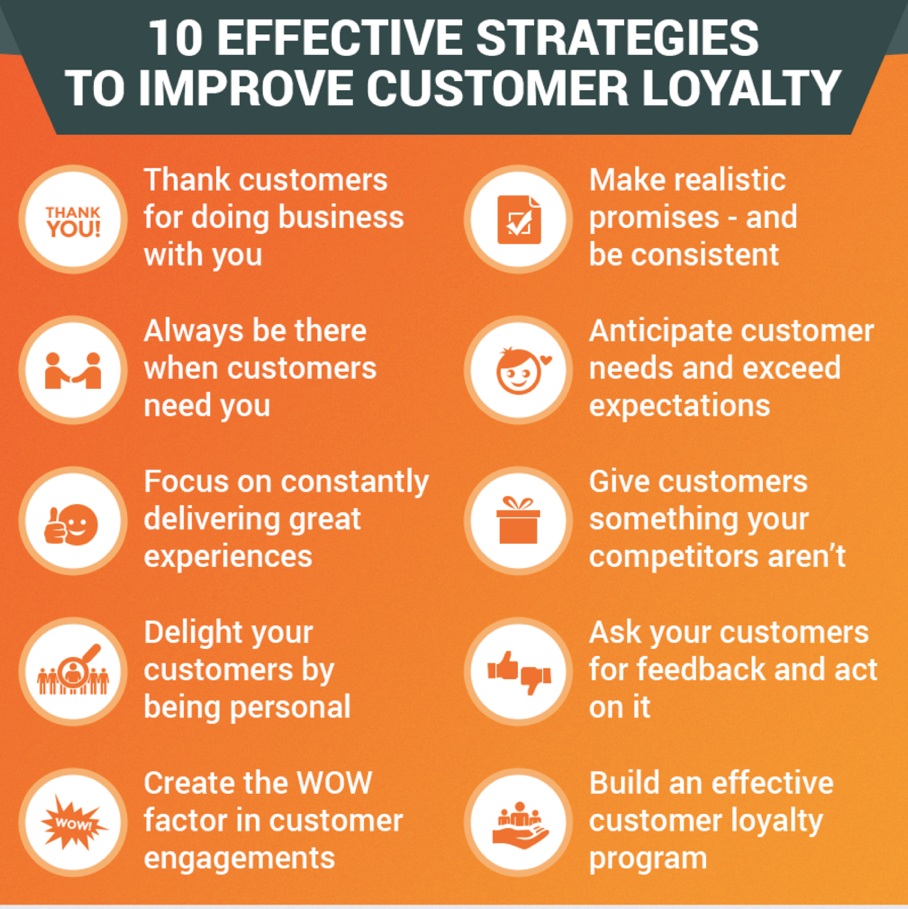
In the graphic below, you'll discover a few effective strategies to improve your customer loyalty. One of my favorites is creating a WOW factor in customer engagements. It's vital to give people something they weren't expecting. Then, you exceed their expectations.
Convince and Convert reports that “44% of email recipients made at least one purchase in the last 12 months based on a promotional email.” Use email to build a loyal consumer base and boost sales.
Email is an intimate channel where your company can talk directly to the buyer. That's why it's important to ensure that your marketing messages resonate with the individual.
Research says that “41% of people said they purchase more from retailers that send personalized emails based on past browsing and buying behavior.”
Your customers don't like receiving mass emails. They want information catered to their needs.
There is value in customer loyalty. Look toward email as a way to build that loyalty.
Segmentation is “the process of dividing your customers up into different groups who share a number of similar characteristics.”
And loyalty segmentation is how you group customers based on their interaction and engagement with your content. It's about going beyond demographics and locations.
Use segmentation to support personalized email campaigns. The goal is to target your buyer's behavior and interests.
A study reported that “mailings targeted to loyalty program members outperformed overall bulk mailings, with open rates 40% higher, click rates 22% higher and transaction rates 29% higher.”
Pat Flynn, podcast host of Smart Passive Income, suggests discovering the different content types within your audience:
“In the health and fitness industry, for example, there are people who are interested primarily in losing weight, and there are others who are more interested in strength training. Within strength training, there are those who are interested in looking beefed up, while there are others who are in it to look lean.”
Learning your buyer's likes and habits is mandatory. It will allow your team to deliver messages that matter to the customer. Therefore, saving your company both time and money.
Below is an example from MyBinding. This business offers different promotional incentives based on the customer's purchase history.
Churning customers receive a larger discount (15%) to lure them back into the purchase cycle. Since the best customers are more likely to purchase again, they receive a slightly smaller incentive, 10%.

What segmentation mix works well for your SaaS? Find out how you can bring more value to a specific audience.
Your SaaS might be missing opportunities to build customer loyalty. It's because you are not sending triggered emails to your segmented groups.
Triggered emails are automated messages sent in response to your customer's actions. And while you're probably using them to send welcome emails, research shows that triggered emails are underused.
MarketingSherpa revealed that “only 24% use them for date-activated trigger messages (such as renewal dates or birthdays), and only 18% use them to acknowledge website behaviors.”
Start reviewing your email data. Gain a better understanding of how your team can benefit from triggered emails.
Derek Buntin at Adonis Media, says, “Use email analytics to determine which customers are opening emails but not making a purchase. Then, send these users follow-up emails with the incentive.”
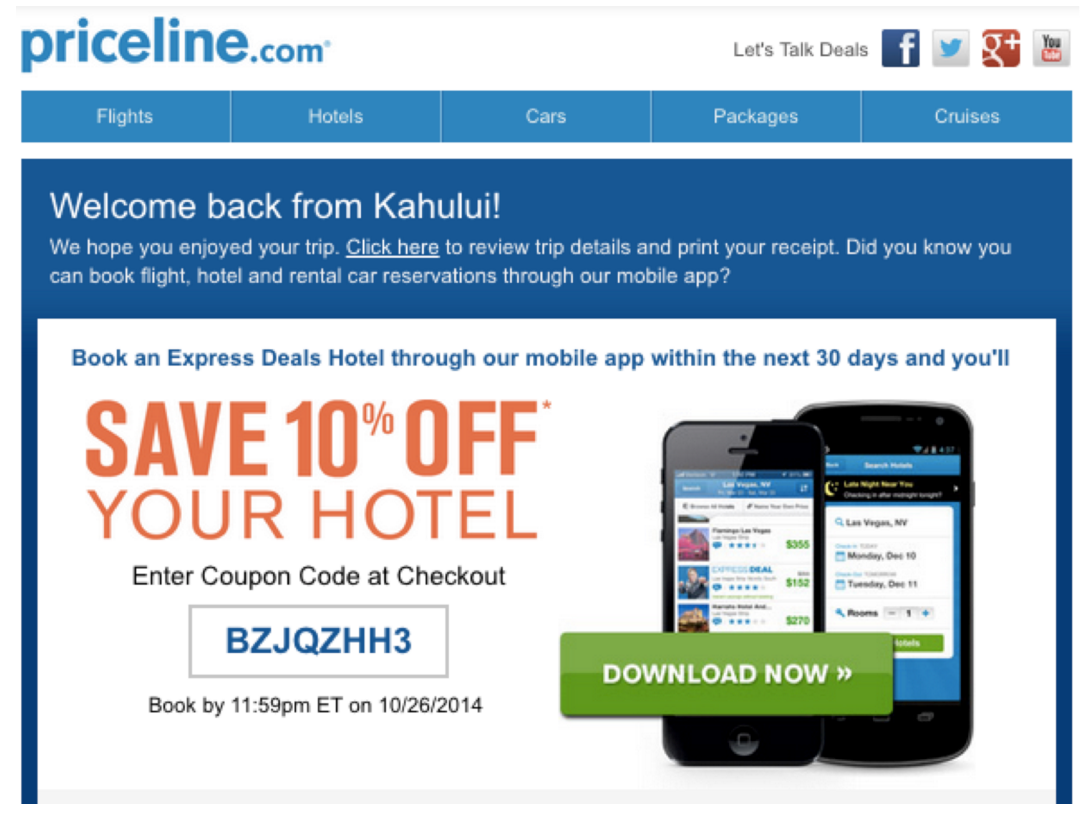
Priceline tailors emails to consumers' on-site behaviors. For instance, when consumers book a trip, the brand will send an email welcoming them home after their vacation is over. And the email includes a discount toward their next trip.
With a loyalty-targeted focus, your team can send customers triggered emails about redemption reminders, requests for feedback, and invitations to VIP programs.
“Loyalty-focused campaigns can span the entire customer life cycle, from the initial entry to program renewal notifications and reminder messages. They also tend to perform better than standard promotional mailings in terms of customer response and revenue,” says John Fetto, a senior B2B marketing manager.
Email marketing doesn't mean sending anything and everything to buyers. You're striving for retention. So, develop email campaigns with the power of triggered messages.
Because all consumers aren't created equal, customization is essential.
And customers are willing to help build personalized experiences. However, they want something in return.
Loyalty360 “noted that 67 percent of U.S. adults would be willing to give companies access to basic personal information in exchange for better service or products.”
It's doesn't matter how great the relationships are if your products don't deliver. Always be mindful of how you can improve your platform, features, and customer service.
Be open and honest with consumers. Transparency helps your organization build sustainable relationships.
“We are fighting against years of people feeling like companies are somehow screwing them over with hidden pricing and confusing return policies. The only way to establish trust and loyalty is to show your cards,” writes Mikkel Svane, founder and CEO of Zendesk.
Focus on a long-term strategy by testing and experimenting. Measure your results and derive new insights from your findings.
You may find out that everyone isn't on the same page. But that's fine. Just make the necessary adjustments.
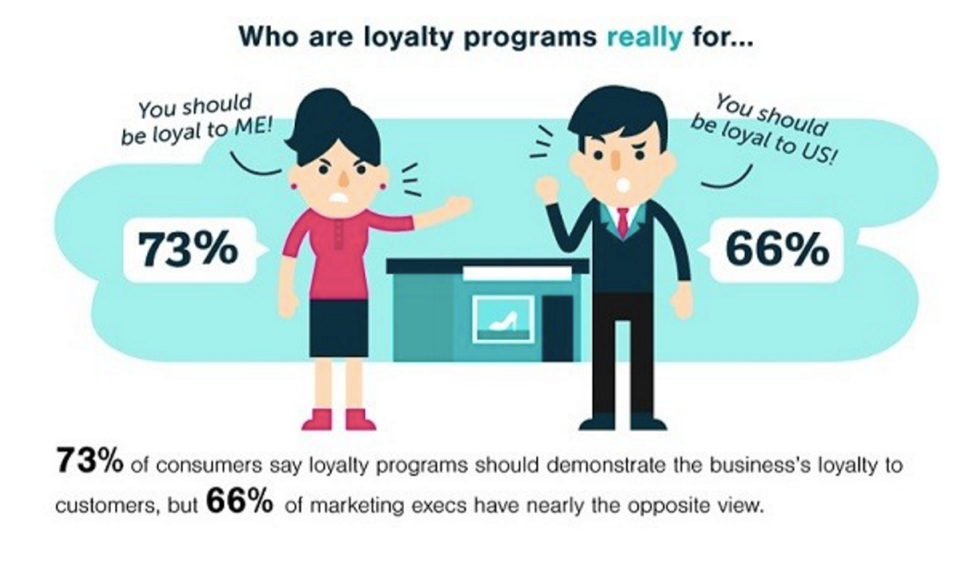
“…[E]mail marketing's biggest challenge: the fact that there is a lot of competition for the same eyeballs. Personalization of your email messages will help your company stand out and generate more attention, higher levels of online engagement and lead to more in-store sales,” says Melanie Franke, Content Marketing Specialist at G/O Digital.
Don't settle for generic or dishonest messaging. Your customers deserve better.
Customer loyalty strengthens your brand. With the power of email segmentation, SaaS teams are able to create personalized experiences.
Loyalty can lead to increases in brand awareness and sales. Segmenting includes differentiating customers by interests and behaviors. And a powerful email campaign strategy is grounded in data-driven triggered emails.
Segment to sustain customer loyalty.
About the Author: Shayla Price lives at the intersection of digital marketing, technology and social responsibility. Connect with her on Twitter @shaylaprice.


Since marketers love a good stat, let's start this post off with one: 2567%. That percentage represents the increase in the number of martech vendors from 2011 to today. It comes courtesy of Scott Brinker, the guru of the infamous martech landscape chart and speaks to the warp speed growth the martech vendor space has seen over a very short period of time.
Among the many differing types of technologies vendors offer is of course, marketing automation - a tool that has very much come into vogue in recent years and for good reason as witnessed by a few more stats:
Rest assured there are many more such stats that support the need for marketing automation.
But with so many vendor options out there, what does a marketer need to consider when it comes to making a choice?
When marketers are looking at marketing automation tools, they need to consider both the simple campaigns and the more sophisticated ones. Marketing technology needs to support marketers in their jobs, and not make them feel like they need to go back to school for a computer science degree. Where they rely more on DIY than IT.
Here are 3 key features marketers need to look for in any marketing automation tool.
1. Campaign Management
Marketers look to marketing automation programs to run their campaigns. Welcome campaigns, nurture campaigns, event reminders. Everything you do is organized around these campaigns. Sometimes they are simple and follow a very linear course of action. But marketers are creative, and have been known to overthink things from time to time.
One of the biggest misconceptions about marketing automation is that you can set a campaign and forget it. That is not what you want to hear about a tool. Have you ever had a marketing plan change? Sometimes it happens right after you send that email. Now it's time to scramble and reconfigure your campaign with another email and landing page. Make sure your solutions can support these real world scenarios.
2. Targeting and Segmentation
Another key component of any marketing automation program is the ease with which you can target and segment your prospects and customers. You need to be able to capture activities and actions from your owned, earned, and paid channels to target the right people with the right message. Don't waste your time and resources on people who-based on their actions-will never be customers.
Just like a marketing team that needs to act a team to get things done, your tools need to connect with other tools, so that you can take advantage of your data to present dynamic content within emails, landing pages, and forms.
3. Lead Management and Scoring
According to a study by Ascend2, 70% of B2B marketers cite improving the quality of leads as the most important objective of a lead generation strategy. And the best way to determine that quality is through lead scoring. That's why you bought-or are considering buying-marketing automation. So you can turn more MQLs into SALs. Every system has lead scoring, but how flexible are they? Most lead scoring models are based on elements of a prospect's profile and their online activity-or their Digital Body Language-and responses to your campaigns. Some programs tie their lead scoring model to a single campaign.
A more flexible and sophisticated system can aggregate activity from multiple campaigns when considering a lead score. Think through your lead scoring model before getting caught in system that doesn't support what's important to qualifying your leads.
Download The Guide to Building Your Marketing Technology Stack to learn more PLUS get the questions marketers need to ask of any potential marketing technology solution provider.


